Skip to content
  • MAIN SITE
  • ABOUT
    • Why Coldfeet
    • Our Team
    • Message From MD
  • Destination
    • Nepal
    • India
    • Bhutan
    • Tibet
  • Activities
  • Gallery
  • Contact
Menu
Cold Feet Adventure
  • MAIN SITE
  • ABOUT
    • Why Coldfeet
    • Our Team
    • Message From MD
  • Destination
    • Nepal
    • India
    • Bhutan
    • Tibet
  • Activities
  • Gallery
  • Contact
Home/The Stone That Meowed – Myanglung’s Giant Stone Cat legend
Posted in? Hidden Nepal

The Stone That Meowed – Myanglung’s Giant Stone Cat legend

Posted By Cold Feet Adventure Posted on August 4, 2026
0

Hidden Nepal — stories that explain Nepal through the people who remember them.

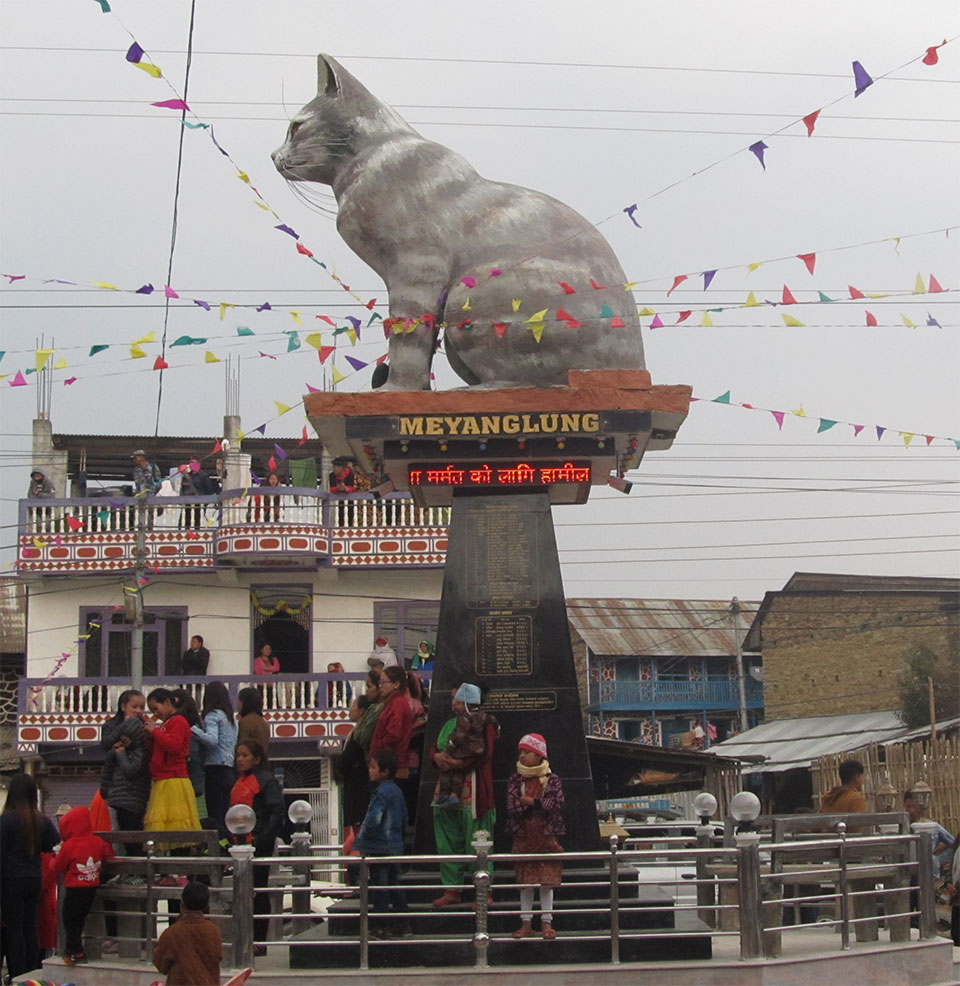
After a two-and-a-half-hour bus ride from Sidhuwa Bazaar in Dhankuta, I expected Myanglung to greet me the way most hill towns do — a bus park, a row of shops, maybe a temple marking the center. Instead there was a giant stone cat sitting above the highway, watching the town unfold beneath it with an expression somewhere between amused and unbothered.

Everyone in town knew there was a story behind it. No two people told it quite the same way.

By evening, someone pointed me to an elderly resident known for his knowledge of local folklore. “It is an old story,” he said. “You can choose for yourself whether to believe it. I believe it from my heart.” Then he told it.

Long before roads reached these hills, porters carried salt, grain and cloth on foot between the plains and the highlands, walking for days at a stretch. One evening, three of them stopped to rest at a chautari — a shaded rest stop built beneath a large tree, common across Nepal’s hills before roads existed, where travelers lowered their loads and news passed from one valley to the next.

Under a peepal tree, the porters built a hearth from a few white stones and lit a fire. One stone shifted on its own. Thinking it unstable, one of the porters struck it with his khukuri. It meowed, then began to bleed. The three fled into the dark.

Villagers who came the next morning found the stone marked with blood. For a while, misfortune and unease were blamed on it. Then one villager reported a dream: a goddess weeping beside the wounded stone, asking that it be worshipped rather than feared. The village placed the stone on a larger rock and began offering prayers. The unease passed, and the settlement came to be called Myanglung — from the Limbu words myaau (cat) and lung (stone).

Whether that’s the historical origin of the name is hard to verify. What’s certain is that the story and the town are now the same thing.

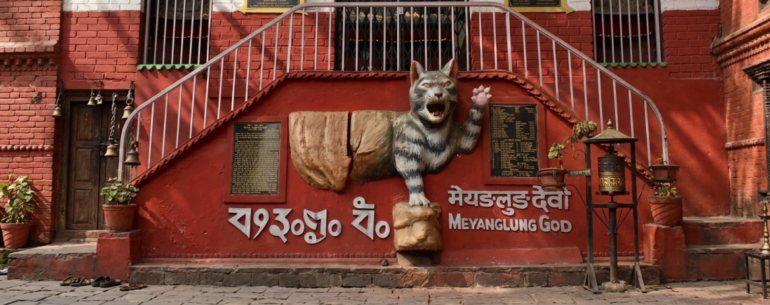
The original chautari is gone. The Meyanglung God Temple stands on the site today, with another stone cat — this one emerging from a split boulder, one paw raised — marking the entrance. Devotees still visit, incense still burns, and the shrine functions as part of daily life rather than a fenced-off relic.

When I later told my grandfather the story, he corrected one detail: “No — the stone didn’t bleed first. It meowed.” I don’t know if that’s the version his grandfather told him, or a detail that changed somewhere along the way. Either is likely. Oral stories like this one aren’t preserved word-for-word — they’re preserved by being told again, with whatever changes each teller remembers.

If you go: Myanglung is the headquarters of Tehrathum district, reachable by bus from Dhankuta (around 2.5 hours from Sidhuwa Bazaar). The temple sits just off the main highway near the town center — hard to miss once you spot the stone cat above the road. Ask a local for their version of the story before you visit the shrine; chances are it won’t match this one exactly, and that’s the point.

Contact us to book a trip to the Cat temple.

Previous Article Nepal Trekking Rules 2026: Guides, Permits & the Solo Travel Update
Next Article Kumari Ghar Kathmandu: Architecture of a Living Goddess

Leave a Reply

Cancel reply

You must be logged in to post a comment.

Related Posts

Posted in? Culture & Heritage ? Hidden Nepal

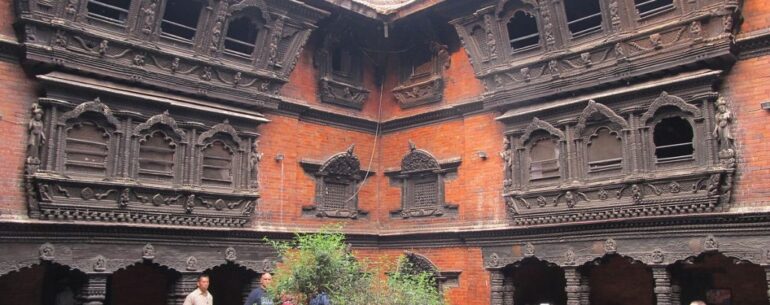
Kumari Ghar Kathmandu: Architecture of a Living Goddess

Discover why the Kumari Ghar’s carved windows were built to conceal, not display — a look at how architecture protects Nepal’s Living Goddess.

Read More about Kumari Ghar Kathmandu: Architecture of a Living Goddess
Posted By Cold Feet Adventure Posted on August 4, 2026
0

Recent Posts

  • The Questions We Take to Pashupatinath | Shiva & Consciousness
  • Nepal Beyond Everest: 7 Treks for People Who Don’t Want the Crowds
  • Why Every Hindu Should Visit Pashupatinath Once
  • Reading a Stupa: What Boudhanath and Swayambhunath Are Actually Saying
  • Remote Trekking in Nepal: 5 Off-Grid Treks for a Digital Detox

Recent Comments

No comments to show.

Archives

  • August 2026
  • July 2026
  • May 2026
  • October 2019
  • July 2019
  • January 2018
  • December 2017
  • November 2017
  • October 2017
  • September 2017
  • August 2017
  • July 2017
  • June 2017
  • May 2017
  • March 2017
  • February 2017
  • December 2016
  • November 2016
  • September 2016
  • August 2016
  • July 2016
  • June 2016
  • May 2016
  • April 2016
  • March 2016
  • February 2016
  • January 2016
  • November 2015
  • September 2015
  • August 2015
  • July 2015
  • May 2015
  • March 2015
  • February 2015
  • January 2015
  • December 2014
  • November 2014
  • October 2014
  • September 2014
  • August 2014
  • March 2014
  • February 2014
  • January 2014
  • December 2013
  • November 2013
  • October 2013
  • June 2013
  • May 2013

Categories

  • ? Culture & Heritage
  • Canyoning
  • Color Festival
  • Cultural Treks
  • Entertainment
  • Festival
  • Festival in Nepal
  • Heli Tours
  • Hiking
  • Mountain Climbing
  • Nepal News
  • Peak Climbing
  • Sat Ghumti Adventure Alley
  • Shivaratri
  • Spiritual Travel
  • Teej Festival Women's
  • Tours
  • travel agency
  • Travel Management
  • Trekking
© 2026 Cold Feet Adventure Nepal Trekking Pvt. Ltd. Developed by: Digixel Inc

Powered by
►
Necessary cookies enable essential site features like secure log-ins and consent preference adjustments. They do not store personal data.
None
►
Functional cookies support features like content sharing on social media, collecting feedback, and enabling third-party tools.
None
►
Analytical cookies track visitor interactions, providing insights on metrics like visitor count, bounce rate, and traffic sources.
None
►
Advertisement cookies deliver personalized ads based on your previous visits and analyze the effectiveness of ad campaigns.
None
►
Unclassified cookies are cookies that we are in the process of classifying, together with the providers of individual cookies.
None
Powered by