
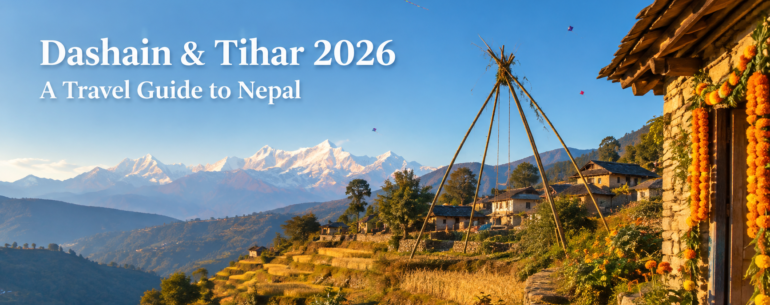

Everyone who has visited Nepal will tell you that autumn is one of the best seasons to trek through the country. But there is a little more to the season than clear skies and mountain views. The autumn trekking window also coincides with Nepal’s two biggest festivals, Dashain and Tihar, the time of year when Nepal goes home.
Dashain is celebrated for fifteen days, and its main day falls on 21 October in 2026. Tihar begins on 7 November. In between, there is a gap that happens to be perfect for the mountains. So here is our advice: spend Dashain in a village in the hills, trek between the two festivals, and come back to Kathmandu for Tihar. We at Cold Feet would be more than happy to help you arrange it, including a stay with a local family along the way.
And no, it is not too late. There is still time to book a ticket.
When Nepal Goes Home
For a few days, or sometimes for a whole month, Nepal’s most popular destination is home.
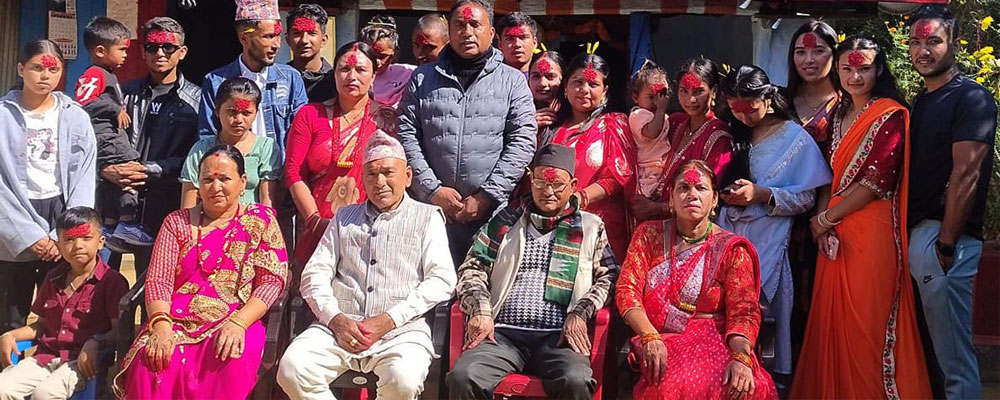
Home, in this case, means the villages and towns people come from before they move to Kathmandu, to one of Nepal’s other cities or, quite often, abroad. In some ways, Dashain is a little like Thanksgiving: families travel long distances to be together, eat well, dress well and receive tika and blessings from their elders. But Dashain is too grand, and too chaotic, to be reduced to that alone.
Kathmandu starts emptying. Literally. Businesses close, roads become strangely quiet, the buses start leaving. For a while, the city feels as though it is lockdown all over again. But in villages all over the country, the atmosphere changes. Suitcases arrive from Kathmandu, Doha and Dallas, houses are cleaned and painted, and suddenly there is laughter everywhere. Kitchens get busy, relatives arrive, and bamboo swings start appearing in village clearings. The autumn skies fill with kites. You can fly one too, if you’d like to give it a try.
For a little while, the places people left behind become the busiest places in the country. Grandparents wait for children and grandchildren to arrive. Cousins who haven’t seen each other for months suddenly turn up at the same house. Someone is dancing on TikTok, a group is playing cards and gambling, and somewhere nearby there is probably a child waiting for their turn on the swing.
And if this is the Nepal you’re coming to see, you might as well ask the obvious question: where should you go?
Go Where Everyone Is Going
Most people picture mountains when they picture Nepal, and for most of the year that is the right instinct. But during Dashain, you should go to the hills.
What Nepalis casually call a hill or pahaad can be higher than the tallest mountains in many other countries. Nepal has a slightly different scale of things. If a landform is below roughly 3,000 meters (nearly 10,000 feet), it doesn’t get to be called a mountain. It is just a “hill.”
And this is exactly where you want to be during Dashain.
The rice terraces are turning gold, the skies are clear, and the mountains stand out sharply in the distance. Villages that can be quiet for much of the year suddenly fill with people.
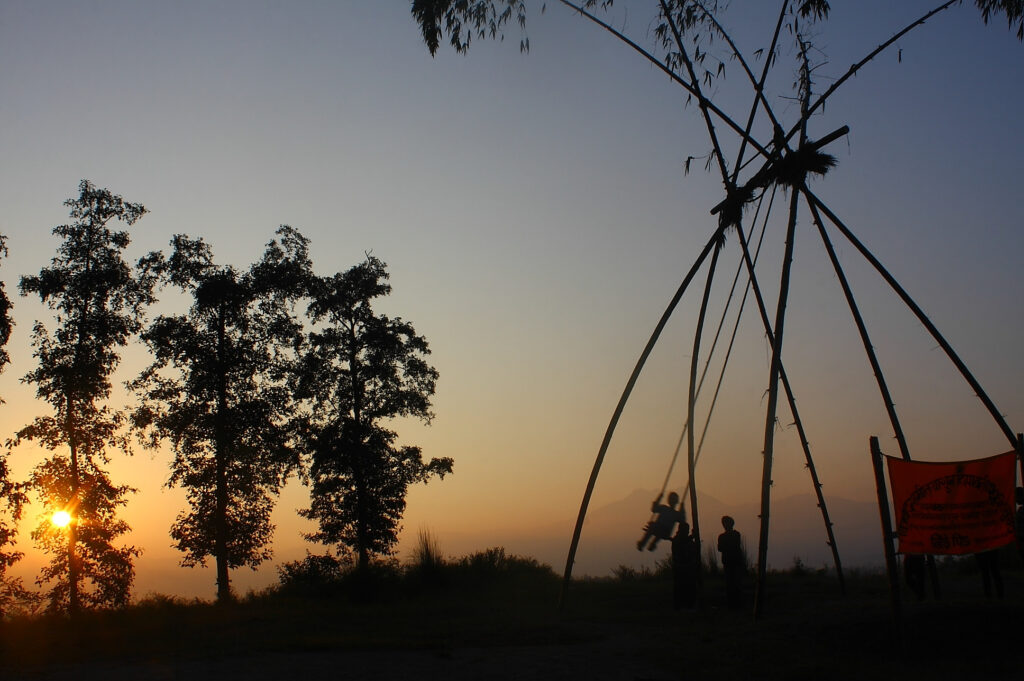
Then there is the ping, as the great bamboo swing is called. It appears in village clearings and on ridges, sometimes high enough to make you reconsider the wisdom of getting on. Children line up for their turn, adults join in, and sooner or later someone will insist that you have a go too. There is a saying that you must leave the earth at least once during Dashain, even if only for a second. The ping is how most people do it.
The nuance is that Dashain changes what a trek means. You are walking through the same hills as at any other time of year, but the villages are having their biggest family gathering of the year. If you stay with a local family, you may find yourself with a tika on your forehead and absolutely no idea how to politely refuse a third helping of dal bhat and goat curry.
So where should you go?
Come to My Village for Dashain
I’m Abhay, a guide at Cold Feet, and if you really want to see what Dashain looks like when Nepal goes home, come to my village.
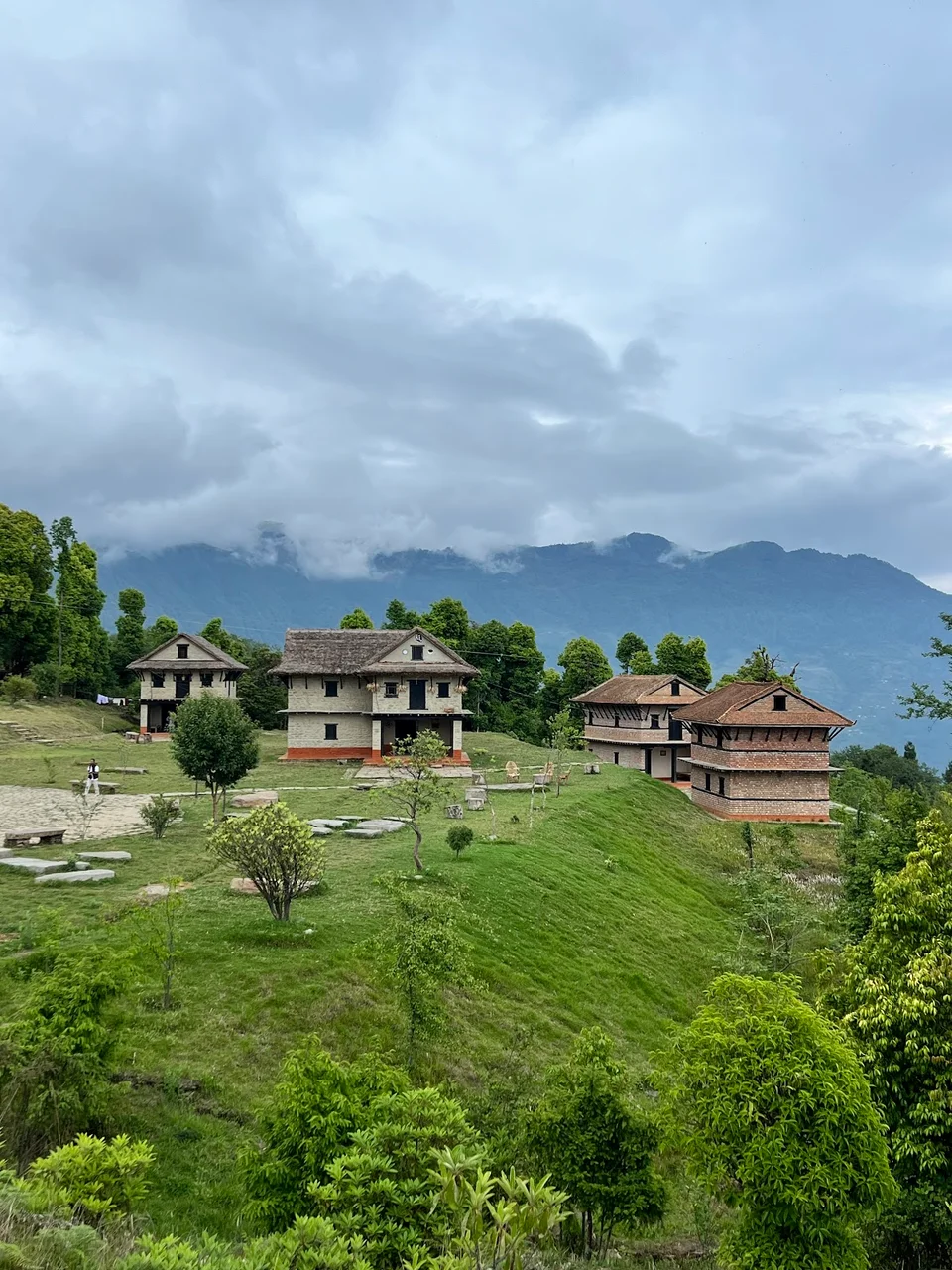
My home is in Aathrai, in Terhathum, in eastern Nepal. This is the pahaad people rarely think about when they picture a trip to Nepal. There are no famous trekking routes here and no line of teahouses leading to a famous mountain. There are villages spread across the hills, rice terraces, cardamom gardens, old houses, forest paths and, during Dashain, a lot of people coming home.
Aathrai is a predominantly hill region with a strong Limbu cultural heritage. It has its own traditions of music, dance, food and craft. Elsewhere in Terhathum, Cholung Park was built to preserve that heritage, with a museum of Limbu history and the sacred stone pillars called lung that stand in Limbu villages. Cardamom is one of Aathrai’s better-known crops, alongside rice, maize, millet, oranges and vegetables. Dashain is celebrated in every household here, my family’s included, and the whole village joins in.
But I wouldn’t bring you here to give you a lesson about eastern Nepal.
I’d bring you home.
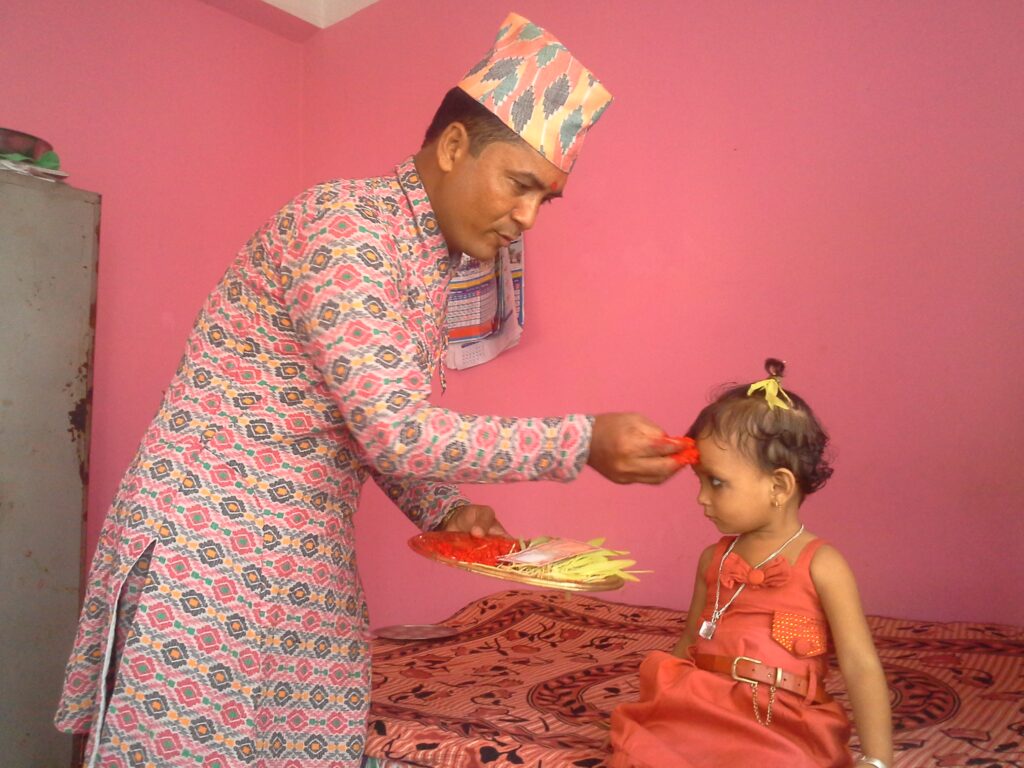
During Dashain, we can explore the village, chase waterfalls, eat far more than we need to, fly kites, find a ping, play cards and sit around while everyone argues about something completely unimportant. You might get tika from the elders, jamara tucked behind your ears and a plate of khasi ko masu put in front of you before you’ve had time to say hello properly.
Here is how it works. We host a small number of guests at my family’s home in Aathrai. We can get there by a night bus to the district headquarters and a jeep from there for about 5 hours. Flight options are available too. We suggest arriving before the main day on 21 October and staying through the tika days.
There is plenty to walk through. Aathrai sits among the eastern hills, with villages, farms and forested slopes connected by roads, ancient resthouses and old walking routes. On any given walk, your destination is much more likely to be someone’s house, a dance party or the only shop in the village. In Paktin, a village in Aathrai, that last one is literally true.
Terhathum Is a Destination in Its Own Right
Aathrai would be reason enough, but the district around it has more to offer than my family’s kitchen.
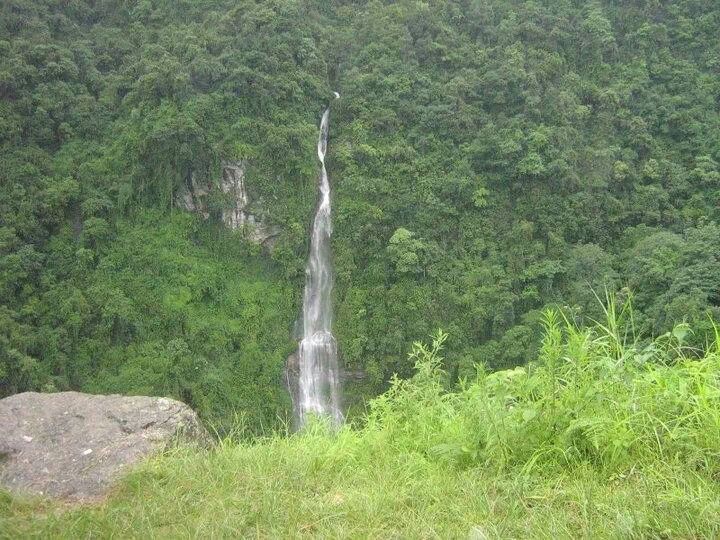
Near Paktin, in Phedap Rural Municipality, the Hyatrung waterfall drops 365 meters, which makes it one of the highest in Nepal. It runs strongest from early summer into autumn and thins out soon after Dashain, which gives you one more reason to come when we say.
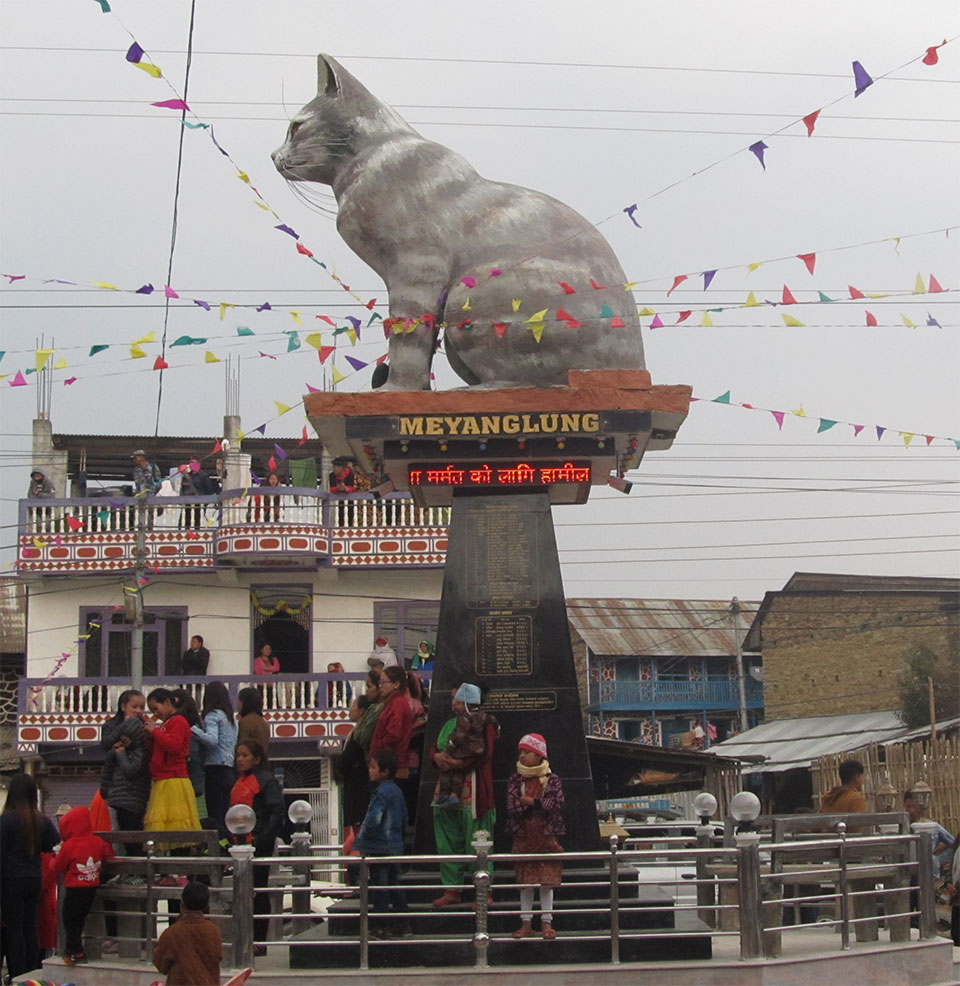
And then there is Myanglung, the district headquarters, which is named after a cat. A stone one, to be exact, said to have meowed when a porter struck it with his khukuri. Every town needs a story, and Myanglung has a better one than most. We told it in full here: The Stone That Meowed: Myanglung’s Giant Stone Cat Legend.
Why We Don’t Trek During Dashain
A word of warning before you book. Don’t arrive in Nepal during Dashain and try to organise a conventional trek at the last minute. The people who usually make those treks possible are going home too. Guides and porters have families to visit, buses are packed, and the country is on holiday.
So instead of asking a guide to show you Nepal for a few days, come and let us show you where we come from. Save the trek for afterwards.
After Dashain: Into the Quiet Mountains
Once the tika days are over, the country starts moving again. Guides and porters are back from their villages, the buses are running, and the skies are at their clearest. The gap runs from the last week of October until Tihar begins on 7 November, about two weeks.
Use it somewhere quiet. Most visitors head for Everest and Annapurna, and so does everyone else. For two weeks, we would point you towards the Manaslu circuit, which is quieter and fits the gap. Kanchenjunga, in the far east, is quieter still and arguably the most remote trek in Nepal, but it takes 26 days, which is longer than the gap between the festivals. Save it for a trip that isn’t squeezed between two holidays.
Back to Kathmandu for Tihar
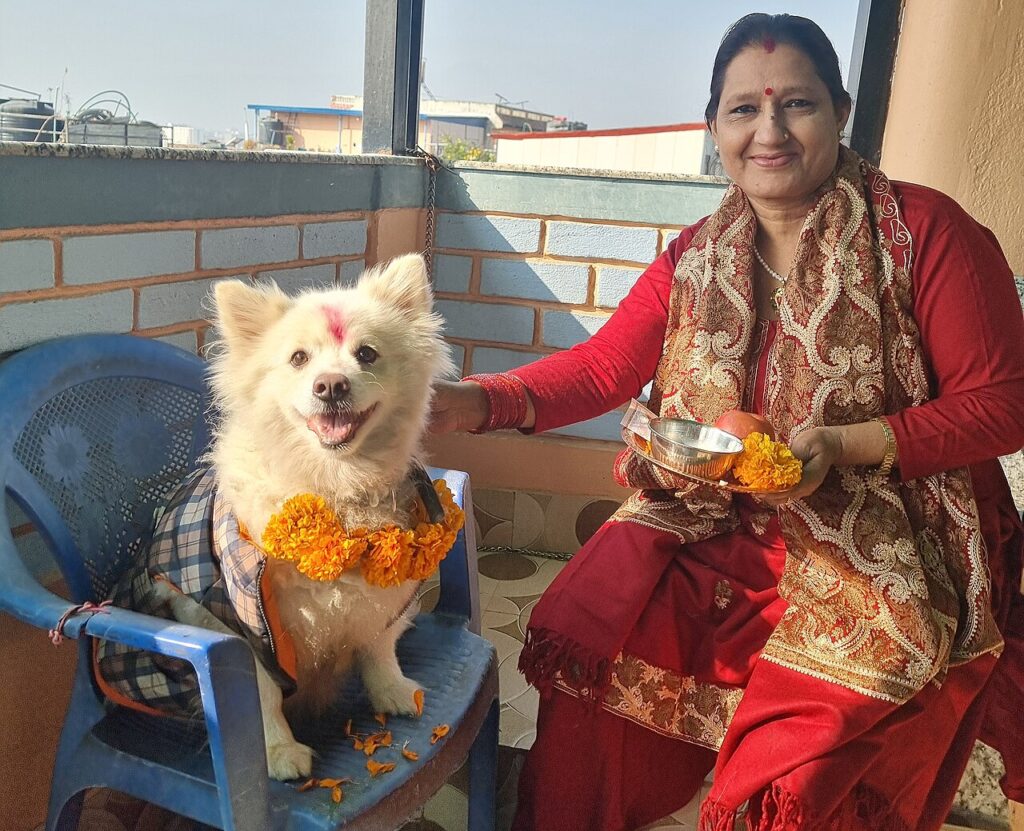
Tihar, the festival of lights, begins on 7 November and lasts five days. After the empty streets of Dashain, Kathmandu fills up again with people, marigolds, lamps and a fair amount of noise. On the night of Laxmi Puja, houses and shops are lined with lights, and in the evenings, groups go door to door singing and dancing.
Over the five days, Nepal thanks, in order, the crows, the dogs, the cows, the oxen and, finally, brothers. Sisters put tika on their brothers’ foreheads and pray for their long lives, which is lovely, though brothers should note where they appear on the list. Dogs, meanwhile, get garlands, tika and a proper meal, which makes Tihar the best time of year to be a Kathmandu street dog.
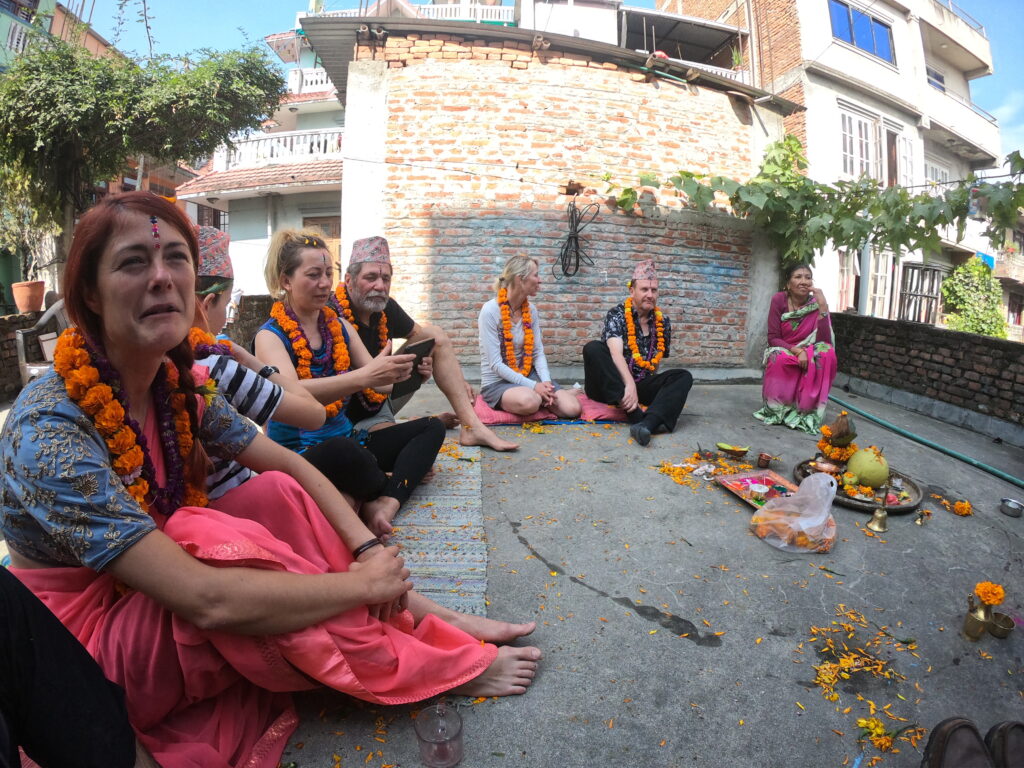
Tihar is also a festival we know from the inside. We have celebrated it with past guests at Cold Feet Home, our homestay in Kathmandu, and that is where we would like to invite you. You can find out more about the homestay here.
Come Home With Us
Dashain at home in the hills, a trek somewhere quiet, and Tihar in Kathmandu. That is the plan, and there is still time to be part of it.
Come to Aathrai for Dashain. We’ll take you home.
For more details, you can mail us at info@coldfeetadventure.com or message us on WhatsApp at +977 9840497012.
Leave a Reply
You must be logged in to post a comment.