
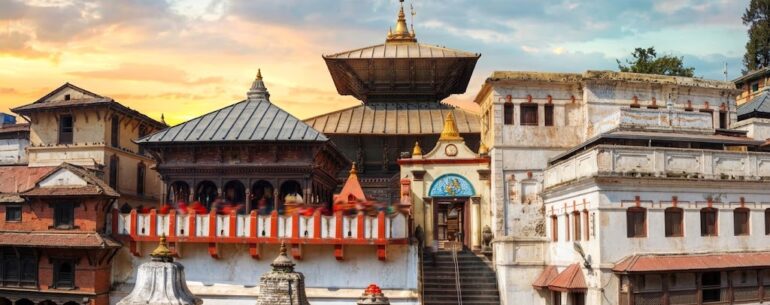

On the banks of the Bagmati River stands one of the most revered Shiva temples in the Hindu world. Here, Lord Shiva is worshipped as Pashupati, the Lord of All Living Beings. Worship begins before sunrise and continues late into the evening — devotees arrive with flowers and bel leaves, priests prepare for the day’s pujas, and nearby, families perform the final rites of loved ones along the ghats. Life and faith share the same space, just as they have for centuries.
That continuity is what makes Pashupatinath remarkable. Many famous temples preserve history. Pashupatinath preserves a living tradition.
Why Is Pashupatinath So Important?
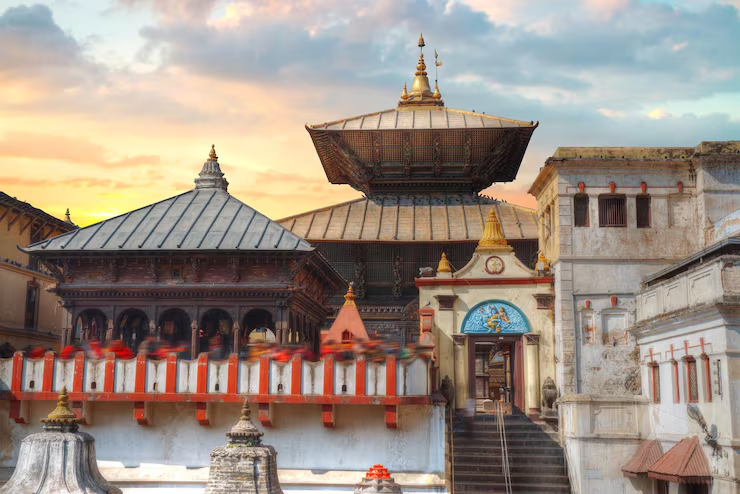
There are thousands of Shiva temples across the Indian subcontinent, yet only a handful hold a place in the collective memory of Hindu pilgrims regardless of where they come from. Pashupatinath is one of them.
The temple stands on the banks of the Bagmati River in Kathmandu, where worship of Lord Shiva has continued for well over a thousand years. The present pagoda-style temple is believed to date to the 17th century, though historical records and inscriptions suggest that the site itself has been revered for much longer. Like Kashi Vishwanath or Kedarnath, Pashupatinath is not known because of a single event or miracle. Its importance comes from continuity. Generations have come here for the same reasons—to seek blessings, fulfil vows, perform the last rites of loved ones and mark the milestones of life with prayer.
That idea is reflected in the temple itself. Sadhus, scholars, families, wandering ascetics, local devotees and pilgrims from across India stand in the same queue for darshan. Outside the temple, life unfolds without ceremony. Inside, the rituals follow a rhythm that has changed remarkably little over the centuries.
For many Indian pilgrims, there is another reason Pashupatinath feels familiar. The temple has long shared a spiritual relationship with India. The chief priests, known as Bhattas, are traditionally selected from Vedic lineages in South India, while the Bhandaris, who care for the temple and its traditions, come from the local Newar community. It is a partnership that has endured for centuries and reflects something larger than administration. Pashupatinath has always belonged to a sacred world that extends beyond political borders.
That is why a visit here rarely feels like travelling to another country. The language may change. The currency may change. The rhythm of worship does not.
More Than a Temple Visit
Most first-time visitors focus only on the main shrine. They shouldn’t.
Just across the Bagmati lies Guhyeshwari Temple, one of Hinduism’s most revered Shakti Peethas — many local devotees begin their pilgrimage here before seeking Shiva’s blessings. A little farther on, Budhanilkantha offers the serene sight of Lord Vishnu reclining on Sheshnag, while Changunarayan, Nepal’s oldest surviving temple, is a reminder that the Kathmandu Valley has been a centre of Hindu worship for well over a thousand years.
Together, these temples tell a larger story. Pashupatinath isn’t an isolated destination — it’s the heart of a sacred landscape where Shaiva, Shakta and Vaishnava traditions continue to thrive within a single valley.
Planning Your Pashupatinath Pilgrimage
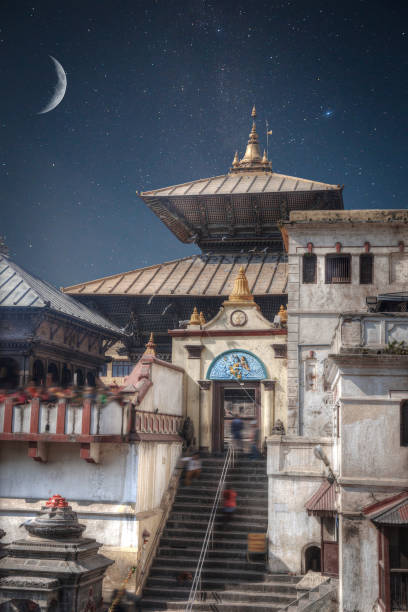
Indian citizens don’t need a visa to visit Nepal, which makes Pashupatinath one of the most accessible international pilgrimages for Hindu devotees. The best time for darshan is early morning, when the temple awakens with the first prayers of the day. If your schedule allows, return in the evening for the Bagmati Aarti — the atmosphere is completely different, and many pilgrims consider experiencing both essential.
If you can, give Kathmandu more than a day. Pilgrimage isn’t about seeing as much as possible. It’s about allowing enough time for a place to leave its mark.
Experience the Valley, Not Just the Temple
A taxi can take you to Pashupatinath. It can’t tell you why many devotees visit Guhyeshwari first, why Budhanilkantha has been revered for centuries, or how to plan your day around the temple’s rhythm instead of the city’s traffic.
At Cold Feet, we’ve built a pilgrimage that connects these sacred places in a way that feels unhurried and meaningful. Whether you’re travelling alone, with your parents, or bringing your family to Nepal for the first time, we handle the logistics so you can focus on what brought you here: Darshan.
The Darshan
The heart of Pashupatinath is the four-faced Shiva Linga housed inside the two-tiered pagoda temple.
Each face represents a different aspect of Shiva. Together they look in the four cardinal directions, a reminder that the Lord’s presence is not confined to one place or one people. Pilgrims move around the sanctum in reverence, offering flowers, bel leaves, milk and prayers before continuing their circumambulation of the temple.
Unlike many famous pilgrimage sites, where the queue itself becomes the experience, Pashupatinath invites you to slow down after darshan. Walk through the surrounding courtyards. Sit by the Bagmati for a while. Watch local families complete rituals that have been passed from one generation to the next.
Many visitors discover that they remember these quiet moments just as clearly as the darshan itself.
Some journeys end when you return home. The journey to Pashupatinath has a way of staying with you long after the bells have fallen silent.
Leave a Reply
You must be logged in to post a comment.