

Everest Base Camp doesn’t have one itinerary — it has several, and the difference between them isn’t just days on a calendar. It’s how your body handles altitude, how much of the Khumbu you actually get to see beyond the trail, and whether the trek feels like an achievement or an ordeal you’re relieved to finish. This guide compares the most common EBC itineraries side by side, explains the acclimatization logic that should decide which one you pick, and helps you match a schedule to your own fitness, time, and travel style — rather than just the shortest one on offer.
Why There Isn’t Just One Everest Base Camp Itinerary
Ask five trekking agencies for an Everest Base Camp itinerary and you’ll likely get five different numbers of days. That’s not inconsistency — it reflects real variables that change from one trekker, season, and operator to the next.
Weather decides more than people expect. Afternoon cloud cover in the Khumbu is routine, not exceptional, which is why most itineraries schedule the hardest walking in the morning and build in flexibility for the days weather doesn’t cooperate.
Flights are the itinerary’s most fragile link. Lukla’s airstrip is short, high, and often fogged in past mid-morning — flight delays and cancellations are common enough that most well-built itineraries assume at least one will happen, rather than hoping none will.
Acclimatization is the biggest driver of length. The difference between a 12-day and 14-day itinerary is almost always extra time at altitude, not extra distance covered — and that difference matters more than it looks on paper.
Operators build itineraries around different priorities: some optimize for the fastest trip a fit trekker can manage, others build in slack days as standard. Neither is dishonest, but they’re not interchangeable, and it’s worth knowing which philosophy you’re booking into.
Private versus group treks changes your flexibility. A private trek can adjust pace day to day; a group trek generally can’t, once it’s booked.
Buffer days — unscheduled days built in for delayed flights or bad weather — are the detail most first-time trekkers overlook until they need one and discover their itinerary doesn’t have one.
Quick Comparison of Everest Base Camp Itineraries
| Itinerary | Best For | Days | Difficulty | Recommendation |
|---|---|---|---|---|
| 12 Days | Fit trekkers with limited time off | 12 | High | Only with prior high-altitude experience |
| 13 Days | A middle ground for reasonably fit trekkers | 13 | Moderate–High | A workable compromise, not the safest option |
| 14 Days | First-time high-altitude trekkers | 14 | Moderate | The most commonly recommended standard |
| 15+ Days | Trekkers wanting extensions or a slower pace | 16+ | Moderate | Best for photography, older trekkers, or add-on routes |
| Helicopter Return | Time-constrained or joint-focused trekkers | 9–11 | Moderate (ascent), Low (descent) | Good for limited time; higher cost and environmental footprint |
Which Everest Base Camp Itinerary Should You Choose?
If You Have Limited Vacation Time
The 12-day itinerary compresses acclimatization into the tightest window most guides consider responsible. It works, but it works on the assumption that nothing goes wrong — no flight delay, no illness, no need to slow down.
Pros: Less time away from work; lower total cost (fewer teahouse nights, fewer guide/porter days). Cons: Almost no buffer for Lukla delays; less time to adjust if altitude symptoms appear; a harder trek, not just a shorter one.
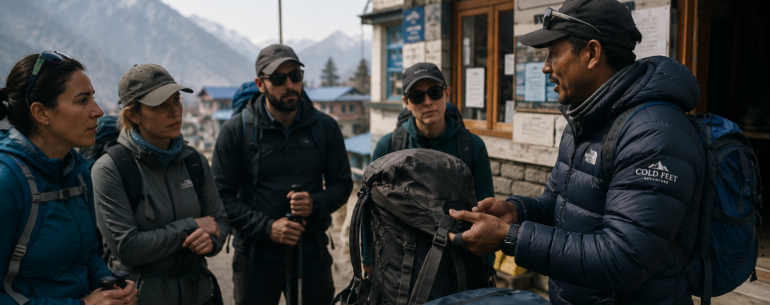
One Cold Feet guide put it simply: “I’ve taken fit 28-year-old marathon runners on the 12-day route who still got a headache at Lobuche. It’s not about fitness. It’s about how fast your blood adapts, and that’s not something running trains.”
If This Is Your First High-Altitude Trek
The 14-day itinerary is the one most guides recommend by default, and for a specific reason: it builds in two full acclimatization days rather than one, at the two points — Namche Bazaar and Dingboche — where the body needs them most.
If You Want the Best Photography
A longer itinerary, 15 days or more, means arriving at viewpoints like Kala Patthar with enough reserve energy left to wait for the light, rather than treating the sunrise shot as a box to check before the knees give out on the way down.
If You’re Over 50
Slower is usually better, and not for the reasons people assume. Acclimatization rate doesn’t track neatly with age or fitness — but recovery time between demanding days does tend to lengthen with age, and a 14–16 day itinerary gives that recovery room to happen without falling behind schedule.
If You’re Travelling Solo
Group itineraries are usually fixed-pace, which can work in your favor as a solo trekker — you’re not the one deciding whether to push on or rest, which removes a surprising amount of the mental load altitude adds to decision-making. A private, flexible itinerary offers more freedom, but also puts more of that judgment call on you alone.
The Classic 16-Day Everest Base Camp Itinerary
Day 1: Arrival in Kathmandu
Your Everest journey begins long before the mountains appear. After arriving at Tribhuvan International Airport, you’ll be welcomed and transferred to your hotel. The rest of the day is yours to recover from the flight, wander the surrounding streets, or simply enjoy your first evening in Nepal. Before dinner, you’ll meet your guide for a briefing on the adventure ahead.
Day 2: Kathmandu Sightseeing & Trek Preparation
Rather than rushing straight to the trail, the itinerary allows a day to experience Kathmandu itself. Visit UNESCO World Heritage Sites including Swayambhunath, Boudhanath Stupa, Pashupatinath Temple, and Patan Durbar Square while completing any last-minute gear checks. It also provides valuable time to recover from jet lag before heading into the mountains.
Day 3: Kathmandu → Lukla → Phakding
Distance: ~8 km · Walking time: 3–4 hours · Altitude: 2,840m (Lukla) to 2,610m (Phakding)
The flight to Lukla is the day’s real event—a short journey into the Himalayas where the hills gradually become mountains. After landing, the trail eases you gently into the trek, following the Dudh Koshi River through villages and pine forests before reaching Phakding.
Day 4: Phakding → Namche Bazaar
Distance: ~11 km · Walking time: 5–6 hours · Altitude: 2,610m to 3,440m
Today’s climb introduces both altitude and the rhythm of the Khumbu. Crossing the famous Hillary Suspension Bridge, you’ll make the long ascent into Namche Bazaar, the bustling Sherpa town that has welcomed trekkers for generations.
Day 5: Acclimatization Day — Namche Bazaar
Officially a rest day; in practice, one of the most important days of the trek. A hike toward the Everest View Hotel or Khumjung allows your body to begin adapting to thinner air while rewarding you with your first views of Everest, Lhotse and Ama Dablam.
Day 6: Namche Bazaar → Tengboche
Distance: ~10 km · Walking time: 5–6 hours · Altitude: 3,440m to 3,860m
The trail contours high above the valley before descending to the Dudh Koshi River and climbing steadily to Tengboche. Most trekkers remember this day for two reasons: the demanding afternoon ascent and the peaceful atmosphere of Tengboche Monastery beneath Ama Dablam.
Day 7: Tengboche → Dingboche
Distance: ~12 km · Walking time: 5–6 hours · Altitude: 3,860m to 4,410m
The forests gradually disappear as the valley opens into a landscape shaped by wind and rock. Prayer walls grow longer, trees become scarce, and the altitude begins to make itself felt with every steady step.
Day 8: Acclimatization Day — Dingboche
Another carefully planned acclimatization day. Most trekkers hike toward Nangkartshang Peak before returning to Dingboche to sleep. The principle is simple: climb high during the day, sleep lower at night, giving your body the time it needs to adapt safely.
Day 9: Dingboche → Lobuche
Distance: ~9 km · Walking time: 5 hours · Altitude: 4,410m to 4,940m
The trail climbs gradually through alpine terrain before reaching the memorials at Thukla Pass, where stone monuments honour climbers and Sherpas who lost their lives on Everest. It’s one of the most reflective moments of the journey.
Day 10: Lobuche → Gorak Shep → Everest Base Camp → Gorak Shep
Distance: ~13 km · Walking time: 7–8 hours · Altitude: 4,940m to 5,364m (Base Camp) back to 5,164m (Gorak Shep)
Today is the day many have imagined for years. Crossing the rocky moraine to Everest Base Camp, you’ll stand at the foot of the Khumbu Icefall, surrounded by some of the world’s highest peaks. The route then returns to Gorak Shep for the night.
Day 11: Gorak Shep → Kala Patthar → Pheriche
Distance: ~16 km · Walking time: 7–8 hours · Altitude: 5,545m (Kala Patthar) down to 4,240m (Pheriche)
An early start rewards you with sunrise from Kala Patthar, widely regarded as the finest viewpoint of Mount Everest. After descending from the highest point of the trek, the trail continues down to Pheriche where the thicker air is immediately noticeable.
Day 12: Pheriche → Namche Bazaar
Distance: ~18 km · Walking time: 6–7 hours · Altitude: 4,240m to 3,440m
Descending through Pangboche and Tengboche, the trail gradually returns to forests of pine and rhododendron. Many trekkers find this one of the most enjoyable walking days, with every hour bringing easier breathing and warmer temperatures.
Day 13: Namche Bazaar → Lukla
Distance: ~19 km · Walking time: 6–7 hours · Altitude: 3,440m to 2,840m
The final day on the trail retraces the route alongside the Dudh Koshi River before the last climb back into Lukla. It’s a day of celebration, reflection, and saying goodbye to the mountains that have shaped the past two weeks.
Day 14: Lukla → Kathmandu
Weather permitting, you’ll take the morning flight back to Kathmandu. The dramatic mountain landscapes slowly give way to the green hills surrounding Nepal’s capital, where a hot shower and a comfortable bed await.
Day 15: Free Day in Kathmandu
This spare day serves two important purposes. If Lukla flights are delayed—a common occurrence in the Himalayas—it provides valuable flexibility. If everything goes according to plan, it’s an opportunity to explore Kathmandu, shop for souvenirs, visit museums, or simply enjoy one final day in Nepal without a backpack.
Day 16: Departure
After breakfast, you’ll be transferred to Tribhuvan International Airport for your onward flight, bringing your Everest Base Camp journey to a close.
12-Day Everest Base Camp Itinerary
The 12-day route follows the same path as the 14-day version, but merges the second acclimatization day at Dingboche into the ascent schedule and removes the Lukla contingency day.
Who should consider it: Trekkers with confirmed prior high-altitude experience (5,000m+), strong general fitness, and a realistic understanding that they’re accepting more risk in exchange for less time.
Potential downsides: No built-in buffer for Lukla delays means a missed flight can compress the return journey uncomfortably. Reduced acclimatization time raises the likelihood of altitude symptoms, particularly for trekkers who haven’t been above 4,000m before.
13-Day Everest Base Camp Itinerary
A middle path — it keeps one full acclimatization day (usually at Namche) but shortens the Dingboche stay.
Who benefits: Trekkers who want a shorter trip than 14 days but aren’t comfortable with the tighter margins of the 12-day route. It’s a reasonable compromise, though guides are generally clearer about recommending 14 days over 13 than they are about recommending 13 over 12.
Everest Base Camp with Helicopter Return
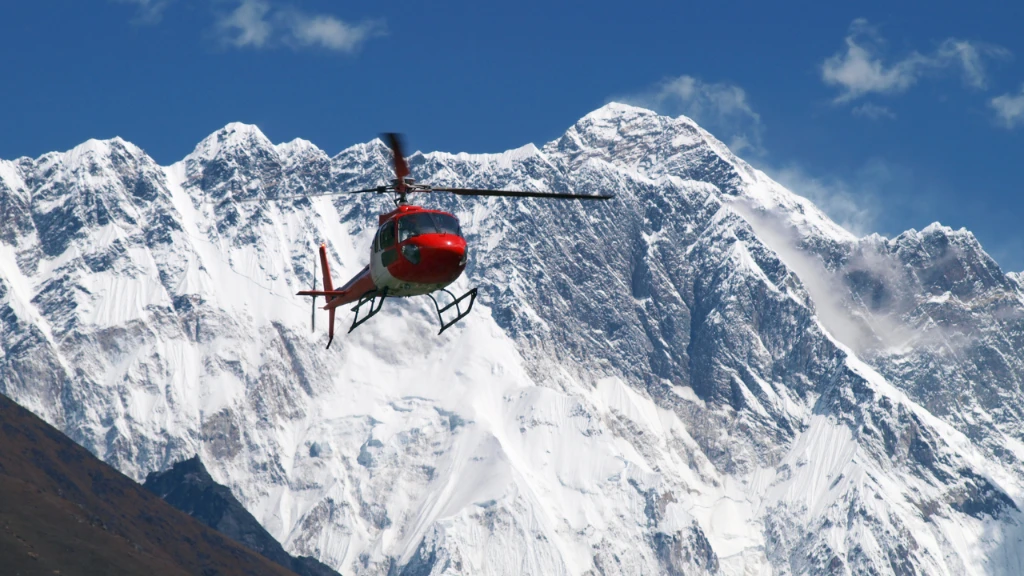
Pros: Cuts several descent days, reducing total trip length to roughly 9–11 days; spectacular aerial views of terrain you’ve just walked through; less cumulative strain on knees and joints.
Cons: Significantly more expensive; weather-dependent in the same way Lukla flights are, so it isn’t a guaranteed shortcut; skips the gradual descent that helps some trekkers process altitude symptoms before returning to lower elevation.
Cost: Helicopter returns typically add a substantial premium over the walking-only itinerary — worth budgeting for separately rather than assuming it’s a minor add-on.
Who should choose it: Trekkers on a tighter schedule who’ve already budgeted for the added cost, or those managing knee or joint issues that make repeated descent genuinely risky rather than just uncomfortable.
Environmental considerations: Helicopter traffic in the Khumbu has real noise and emissions impact in a valley many communities and wildlife depend on. It’s not a decision to make purely on convenience without weighing that cost.
Acclimatization Days Explained
This is the section that actually decides which itinerary is right for you — more than the day count, the cost, or the scenery.
Above roughly 2,500 metres, the amount of oxygen in each breath starts declining. Your body responds by breathing faster and deeper, increasing heart rate, and gradually producing more red blood cells to carry oxygen more efficiently. That last adaptation is slow — it takes days, not hours — which is the entire reason acclimatization days exist at all.
Why Namche: at 3,440m, it’s the first point where altitude symptoms typically begin, and it’s also positioned at a natural plateau in the route where a rest day doesn’t cost momentum.
Why Dingboche: at 4,410m, it’s the second major threshold, close enough to Base Camp’s 5,364m that skipping this rest day is where most preventable altitude sickness cases actually originate.
Climb high, sleep low is the guiding principle behind most acclimatization hikes: ascending a few hundred metres during the day, then returning to sleep at a lower elevation, triggers the body’s adaptive response without the risk of sleeping at an elevation it isn’t ready for yet.
None of this guarantees comfort. Mild headache, disrupted sleep, and reduced appetite are common even on well-acclimatized itineraries — they’re a sign the body is adjusting, not necessarily a sign something has gone wrong. Severe symptoms — confusion, loss of coordination, breathlessness at rest — are different, and the only appropriate response to those is descent, not patience.
Daily Walking Distances
| Day | Route | Distance | Walking Hours | Altitude | Elevation Gain |
|---|---|---|---|---|---|
| 1 | Lukla → Phakding | 8 km | 3–4 hrs | 2,610m | -100m |
| 2 | Phakding → Namche | 11 km | 5–6 hrs | 3,440m | +830m |
| 3 | Acclimatization (Namche) | ~6 km (day hike) | 3–4 hrs | 3,440m (sleep) | Variable |
| 4 | Namche → Tengboche | 10 km | 5–6 hrs | 3,860m | +420m |
| 5 | Tengboche → Dingboche | 12 km | 5–6 hrs | 4,410m | +550m |
| 6 | Acclimatization (Dingboche) | ~7 km (day hike) | 4–5 hrs | 4,410m (sleep) | Variable |
| 7 | Dingboche → Lobuche | 9 km | 5 hrs | 4,940m | +530m |
| 8 | Lobuche → EBC → Gorak Shep | 13 km | 7–8 hrs | 5,364m (peak) | +424m |
| 9 | Gorak Shep → Kala Patthar → Pheriche | 16 km | 7–8 hrs | 5,545m (peak) | -924m (net) |
| 10 | Pheriche → Namche | 18 km | 6–7 hrs | 3,440m | -800m |
| 11 | Namche → Lukla | 19 km | 6–7 hrs | 2,610m | -830m |
Elevation Profile
[Elevation profile graphic to accompany this section: a line chart plotting altitude against trek day, showing the two acclimatization plateaus at Namche (3,440m) and Dingboche (4,410m), followed by the steady climb to Base Camp (5,364m) and Kala Patthar (5,545m), then the steep multi-day descent back to Lukla.]
Best Time for Each Itinerary
Spring (March–May): The most popular season, with generally stable weather and rhododendrons in bloom at lower elevations. Trails and teahouses are busiest; booking ahead matters more here than in any other season.
Autumn (September–November): Considered the most reliable season for clear mountain views, following the monsoon’s end. Also heavily trafficked — expect company on the trail.
Winter (December–February): Colder, quieter, and clearer in some respects — cold air often means sharper visibility — but teahouses above Dingboche may have limited facilities, and cold-related risks require more careful preparation.
Monsoon (June–August): The least recommended season for EBC specifically. Cloud cover frequently obscures mountain views, and Lukla flight delays become more common, not less.
How Difficult Is the Itinerary?
Fitness matters, but less than most first-timers assume — this trek asks more of endurance than raw strength. Regular hiking or cardio training in the months before departure genuinely helps.
Altitude is the variable fitness can’t fully compensate for. It affects people unpredictably, regardless of age or training.
Mental challenge is underestimated as often as physical difficulty is overestimated — long days, repetitive terrain, and the discomfort of altitude symptoms test patience more than muscle.
Terrain is steady but rarely flat — expect consistent ascent and descent, rocky trail sections, and suspension bridges that unsettle some trekkers more than the altitude does.
Daily schedule is generally front-loaded — early starts, afternoon arrival, before the daily weather shift that tends to bring cloud and cold in by early afternoon.
Common Itinerary Mistakes
- Choosing the shortest route on price alone, without weighing the acclimatization trade-off it usually represents.
- Ignoring acclimatization days by treating them as optional rest, rather than the physiological requirement they actually are.
- Flying home immediately after the trek, leaving no buffer if Lukla flights are delayed on the way back — which happens often enough to plan around.
- Underestimating Lukla delays in general — weather here is not a rare inconvenience, it’s a routine part of the itinerary’s risk.
- Carrying too much weight, which compounds fatigue on a trek where energy management matters more than most people expect going in.
Can You Customize the Itinerary?
Yes, and for trekkers with more time or specific interests, it’s often worth doing.
Private treks allow pace adjustments day to day, which group itineraries can’t offer.
Extra acclimatization days can be added anywhere the itinerary feels rushed, particularly for older trekkers or those with no prior high-altitude experience.
Gokyo extension adds the turquoise Gokyo Lakes and a crossing of the Cho La pass, for trekkers wanting a longer, more varied route than the standard EBC trail.
Three Passes is the most demanding variation, linking Kongma La, Cho La, and Renjo La into a single extended circuit — recommended only for trekkers with real high-altitude experience.
Ama Dablam Base Camp is a shorter detour for trekkers wanting a closer view of one of the Khumbu’s most photographed peaks, without the technical climbing it requires to summit.
Pheriche route is sometimes used as an alternative descent path, offering a quieter return than the main trail.
Frequently Asked Questions
How many days do you need for Everest Base Camp? Most itineraries run 12–14 days on the trail, with 14 the most commonly recommended for first-time high-altitude trekkers.
Is 12 days enough? It can be, for trekkers with prior high-altitude experience and strong fitness — but it leaves little margin for delays or altitude symptoms.
Is 14 days better? For most first-timers, yes — the extra acclimatization time meaningfully reduces altitude sickness risk.
Can beginners do this itinerary? Yes, with the 14-day (or longer) route and realistic expectations about pace and difficulty.
Can you skip acclimatization? Not safely. Acclimatization days address a physiological process, not a scheduling preference.
What happens if Lukla flights are delayed? Itineraries with a built-in contingency day absorb this without disrupting the return trip; itineraries without one may require last-minute rebooking.
Can children trek to Everest Base Camp? It’s possible with the right preparation and a longer, slower itinerary, though altitude affects children unpredictably, same as adults.
Should I add extra days in Kathmandu? A day before departure helps with gear checks and jet lag; a day after helps absorb any Lukla-related delays.
Do I need a guide? Nepal’s current regulations require a licensed guide for most trekking routes, including Everest Base Camp.
What is the hardest day? Most trekkers name either the Base Camp/Kala Patthar day (longest and highest) or the Tengboche climb (steep elevation loss and gain in one afternoon).
What’s the difference between 12, 13, and 14-day itineraries in practice? Primarily acclimatization time, not distance covered — the trail is largely the same regardless of itinerary length.
Is the helicopter return worth it? Depends on budget, time constraints, and physical considerations like joint health — it’s a genuine trade-off, not a simple upgrade.
What’s the best season for EBC? Spring and autumn offer the most reliable weather; winter is quieter but colder; monsoon is generally not recommended.
Do I need travel insurance? Yes — insurance covering high-altitude trekking and emergency evacuation is essential, not optional, for this route.
Can I do EBC without a guide, independently? Current regulations require a licensed guide for this trek; independent solo trekking without one is not permitted under current rules.
Final Thoughts: The Best Itinerary Is the One That Lets You Enjoy the Journey
Everest Base Camp isn’t a race to a signboard at 5,364 meters. The memories people cherish rarely come from arriving first — they come from sharing tea with strangers in Namche, watching dawn touch Ama Dablam, or lingering long enough to hear monastery bells echo across the valley. The best itinerary isn’t the fastest one. It’s the one that gives you enough time to experience the Khumbu, not simply pass through it.
Leave a Reply
You must be logged in to post a comment.